
Categories
Recent Posts


You want a brighter, more balanced smile, but choosing the right veneer shade can feel overwhelming. A shade that looks too white may appear artificial, while one that is too dark may not deliver the refreshed look you want. That is why understanding how to choose veneer shade matters before starting treatment.
Whether you are dealing with discoloration, worn enamel, or chipped teeth, the right porcelain shade can completely transform your smile while still looking natural. The goal is not to create a “perfect” Hollywood smile that stands out for the wrong reasons. The goal is to create a smile that fits your facial features, skin tone, and overall appearance.
At DS Family and Cosmetic Dentistry – By: Dr. Daniel Sluyk, we help patients in Scottsdale choose veneer shades that look clean, natural, and timeless without appearing overly bright or artificial.
What Exactly Is a Veneer Shade?
Dental porcelain comes in dozens of shades. Some are bright white. Some are more cream or ivory. Some have a slight gray or yellow undertone. The shade you choose determines how your final smile looks under natural light, in photos, and in everyday conversation.
Unlike a tooth-colored filling that blends with one tooth, porcelain shells are placed across multiple front teeth. That means the shade you select becomes your new smile’s baseline color. It needs to:
- Look natural next to your surrounding teeth or gums
- Complement your skin tone and eye color
- Hold up consistently under different lighting conditions
- Match your personal preference for brightness
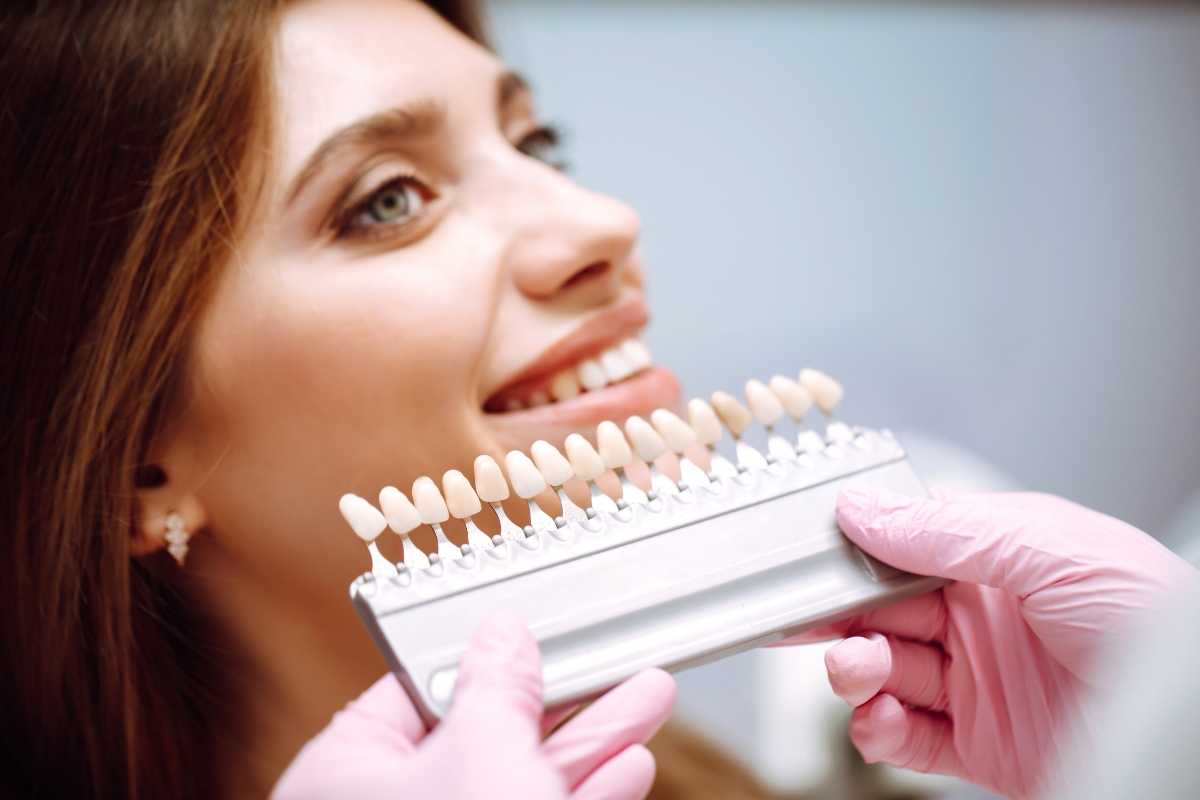
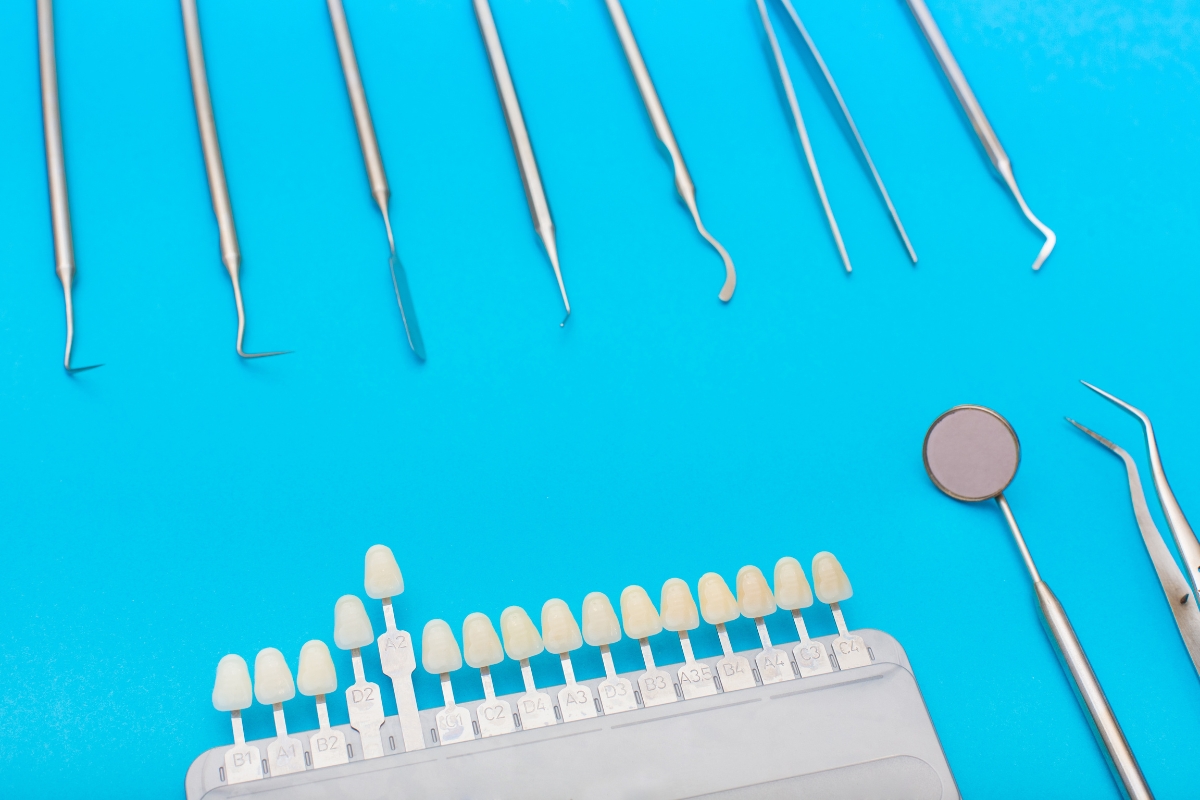
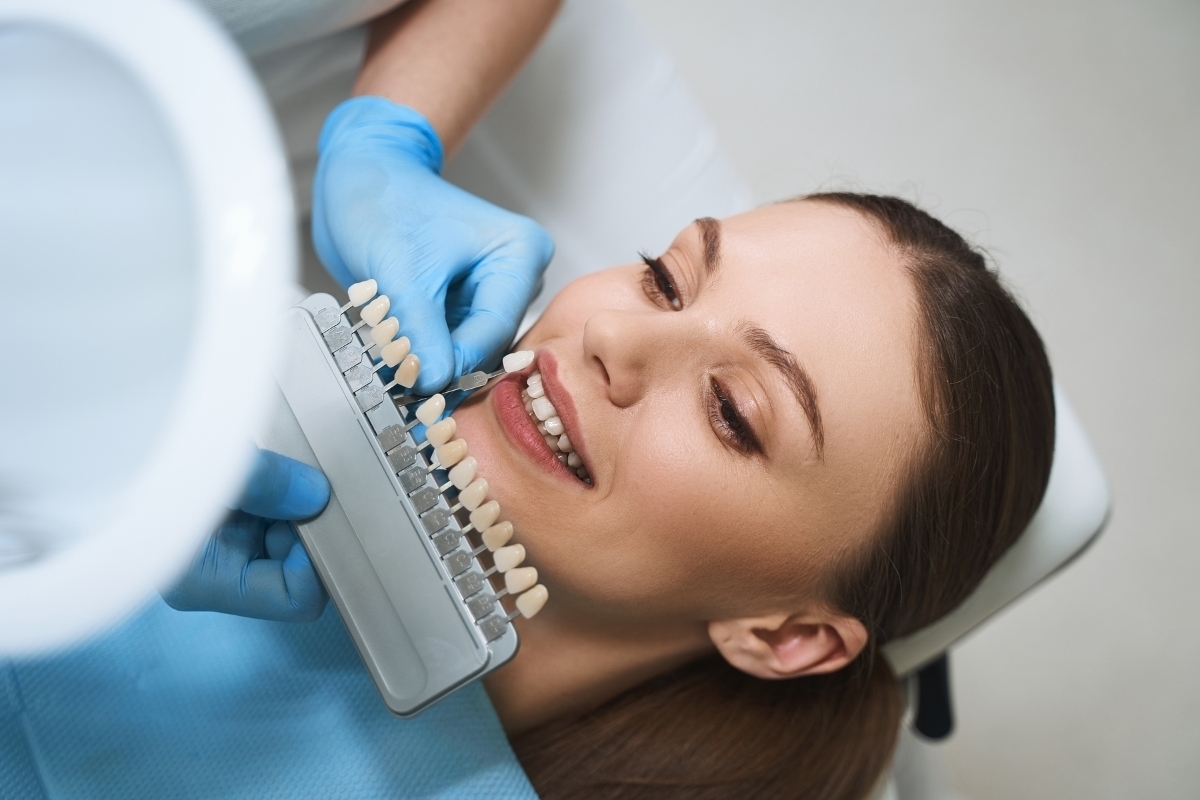
Most dental offices use a shade guide system, commonly the VITA Classical guide, which organizes shades into four color groups: A (reddish-brown), B (reddish-yellow), C (gray), and D (reddish-gray). Within each group are multiple levels of lightness and saturation. Your dentist will hold these small, tab-sized samples against your natural teeth to find the best match or upgrade.
Key Factors That Influence the Right Shade for You
1. Your Natural Tooth Color
The shade you choose should not look like a sudden jump from your surrounding natural teeth. If you have only a few porcelain shells placed, the ones next to them need to blend in. Your dentist will consider the color of your untreated teeth when making the recommendation.
If you plan to whiten your remaining teeth, do so before getting fitted for your dental shells. Whitening after placement can cause a mismatch, since porcelain does not respond to bleaching agents.
2. Your Skin Tone
This is one of the most overlooked factors in shade selection, and it makes a big difference.
- Fair or light skin: Warmer, slightly ivory shades often look more natural than stark white
- Medium or olive skin: A range of shades work well, from natural white to slightly brighter
- Darker skin tones: Brighter shades tend to contrast beautifully and look natural
If you go too white for your skin tone, your smile can look artificial in photos and in person. A good rule of thumb is to aim for a shade that is slightly whiter than the whites of your eyes. That creates a naturally good but not blinding effect.
3. Your Age
Younger patients often opt for brighter shades. Older patients sometimes prefer something slightly warmer because very bright white can look out of place on mature skin. There is no rule here; it is all about what looks right for your face.
4. The Shape and Size of Your Smile
Broader smiles tend to show more teeth, which means more porcelain is visible at once. In those cases, selecting a shade with a slight translucency at the edges can mimic how natural teeth catch light. Thinner smiles might need less brightness to avoid looking too theatrical.
5. Your Personal Preference
Some people want a Hollywood-white smile. Others want something that looks completely untouched. Both are valid. The key is knowing which category you fall into before your consultation so you can communicate clearly.
How to Pick Veneer Color: Common Mistakes to Avoid
Knowing how to pick veneer color means knowing just as much about what not to do as what to do. Here are the most common mistakes patients make:
Going Too Bright Too Fast
Bright white porcelain looks great in ads. In real life, on real faces, under real lighting, it can look fake. Most patients who go very bright initially wish they had gone a shade or two warmer. Start with your dentist’s recommendation and ask to see it in natural light before committing.
Matching the Shade Guide Under Fluorescent Lights
Dental office lighting is not the same as sunlight or indoor home lighting. If you can, ask your dentist to step outside or hold the shade guide near a window. Your smile will be seen in many different environments, and you want the shade to look good in all of them.
Choosing Based on Photos Alone
Celebrity smiles in magazine photos are often heavily retouched. What looks incredible on a printed page can look jarring in person. Stick to shade guides and your dentist’s recommendations rather than trying to match an edited photo.
Skipping the Trial Smile
Many dental offices offer a mock-up or trial smile where temporary shells are placed so you can see the result before anything permanent is done. Always take this option if it is available. It lets you evaluate the shade in real conditions and make adjustments before finalizing.
Not Considering Your Lip Color
Your lips frame your teeth. If you wear lip color regularly, consider how your typical shades interact with the porcelain shade you are choosing. A very warm-toned lip can clash with a cool, bright white. Ask your dentist about this during your consultation.
What Shade Should Veneers Be? Understanding the Shade Guide
Patients often ask: what shade should veneers be for a natural result? The honest answer is: it depends on your goals. But here are some general guidelines that apply to most patients:
For a Natural, Everyday Look
Shades in the A2, A3, or B1 range on the VITA scale tend to look the most natural on a wide range of patients. B1 is one of the most popular choices, it’s noticeably bright without being over the top. A2 is slightly warmer and suits patients who want a subtle change.
For a Brighter, More Polished Look
Shades like 0M1, 0M2, or BL shades (bleached range) go beyond what whitening can achieve naturally. These are the shades used in media and entertainment. They work beautifully on the right candidate but require careful consideration of skin tone and how adjacent teeth will look.
For Patients Covering Severe Discoloration
If your natural teeth have significant staining from tetracycline, fluorosis, or trauma, you may need a more opaque porcelain to block out the discoloration. In these cases, your dentist may recommend a specific shade combined with a more opaque ceramic material rather than the translucent type used for standard cases.
Your Scottsdale dentist will guide you through these options and help you understand which materials and shades are appropriate for your specific clinical situation.
Natural Looking Veneers Shade: What That Actually Means
Everyone wants a natural looking veneers shade, but natural means different things to different people. Here’s how to think about it clearly:
Translucency Matters
Natural teeth are not one solid color. They are slightly darker at the base, lighter in the middle, and often more translucent at the biting edge. High-quality dental ceramics can replicate this layered appearance. When consulting with your dental team, ask whether they use layered ceramics or pressed ceramics, as this affects how the final result mimics the depth of a real tooth.
Surface Texture Matters
Perfectly smooth, glossy porcelain can look artificial because natural teeth have subtle surface texture- small ridges, grooves, and variations that catch light differently. Ask whether your ceramicist can add surface characterization to the final restoration.
Shade Variation Matters
Natural smiles are rarely one uniform color. Canine teeth are often slightly darker than central incisors. If all your teeth are the same shade, it can look like a set of tiles rather than a real smile. Subtle shade variations across teeth create a more lifelike result.
Gum Framing Matters
Even a perfect shade can look off if the gum line is not right. If your gums are uneven or cover too much tooth surface, the porcelain may appear too short or too long. In some cases, a minor gum adjustment before placement dramatically improves the final appearance.
The Consultation Process: What to Expect
A proper shade consultation is more than just flipping through a color chart. Here is what a thorough process looks like at a reputable dental office:
Step 1: Photography and Analysis
High-resolution photos of your teeth and face are taken before any discussion of shades. This gives the dental team a baseline to work from and, in many cases, enables digital smile design.
Step 2: Shade Matching
The shade guide is held against your natural teeth under different lighting conditions. Your dentist will look at your smile in the context of your full face, not just the teeth in isolation.
Step 3: Discussion of Goals
Your dentist will ask what you want your smile to look like. Bring reference photos if you have them. Be specific about whether you want a natural result or something noticeably brighter.
Step 4: Trial Smile or Mock-Up
Temporary composite material is applied to your teeth to simulate the final result. You get to evaluate the shade in real life before any permanent work begins. This is your best opportunity to request adjustments.
Step 5: Lab Communication
The shade is communicated to the ceramics lab using a combination of the shade code, photography, and, in many cases, a custom shade map. A skilled ceramicist uses this information to craft each porcelain piece individually.
Ready to Find Your Perfect Shade? Visit Our Dental Office in Scottsdale
Choosing the right shade is a conversation, not a guessing game. When you sit down with our team, we walk through your goals, facial features, lifestyle, and timeline. We use digital imaging and shade guides to show you what your smile will look like before we start any permanent work.
How to choose veneer shade from our dental office in Scottsdale is not something you have to figure out on your own. Our team works with you at every step, from the first consultation to the final placement, to make sure your result looks exactly the way you imagined.
We understand that every patient has a different idea of what “natural” means. Some want barely-there. Some want noticeably brighter but still believable. Whatever your goal, we help you get there with precision and care.
Final Thoughts
If you live in the Scottsdale area and are thinking about porcelain shells for discolored, chipped, or uneven teeth, now is a great time to take the next step. A single consultation can tell you whether you are a candidate and what your options look like. Explore our services and see how we approach smile makeovers for patients across Scottsdale and the surrounding area. When you are ready, book an appointment and let’s find the shade that makes your smile look natural, refreshed, and completely you.
FAQS
Q1: How do I know which veneer shade will look natural on me? The right shade depends on your skin tone, natural tooth color, and personal goals. During your consultation, the dental team evaluates all these factors together and uses a shade guide under multiple lighting conditions to find what works best for your face.
Q2: Should I whiten my teeth before getting veneers? Yes, if you plan to whiten your remaining teeth, do it before your veneers are fitted. Porcelain doesn’t respond to bleaching agents, so whitening afterward can create a noticeable mismatch between your treated and untreated teeth.
Q3: What is a trial smile, and do I really need one? A trial smile places temporary shells on your teeth so you can evaluate the shade and shape in real life before anything permanent is done. It’s one of the most valuable steps in the process and gives you the chance to request changes with zero risk.
Q4: Will my veneers look too white or fake? Only if the wrong shade is chosen. Our team pays close attention to translucency, surface texture, and subtle shade variation across teeth, all the details that make porcelain look like real enamel rather than a uniform, artificial finish.
Q5: How many appointments does the shade selection process take? Shade selection typically happens during your consultation and mock-up appointment before any permanent work begins. Photography, shade matching, and a trial smile are all part of this process to make sure the final result matches your expectations exactly.